WHOLESALE Research compound CATEGORIES
Lifted Industries supplies research compounds across nine research categories — spanning metabolic, longevity, healing, cognitive, growth hormone, anti-aging, recovery, sexual health, and performance research.
Compounds are available in injectable vial, nasal spray, oral spray, and capsule formats where confirmed for each category.
All products are supplied strictly for laboratory and research applications.

Browse wholesale research peptides by category. Nine categories, USA made, supplied research use only to qualified accounts, with third-party lab testing behind every lot and a certificate of analysis tied to the lot number you receive.
Browse By Peptide Category
Wholesale Research Compounds
Research Peptide Formats
Several Available Options | For Research Use Only*
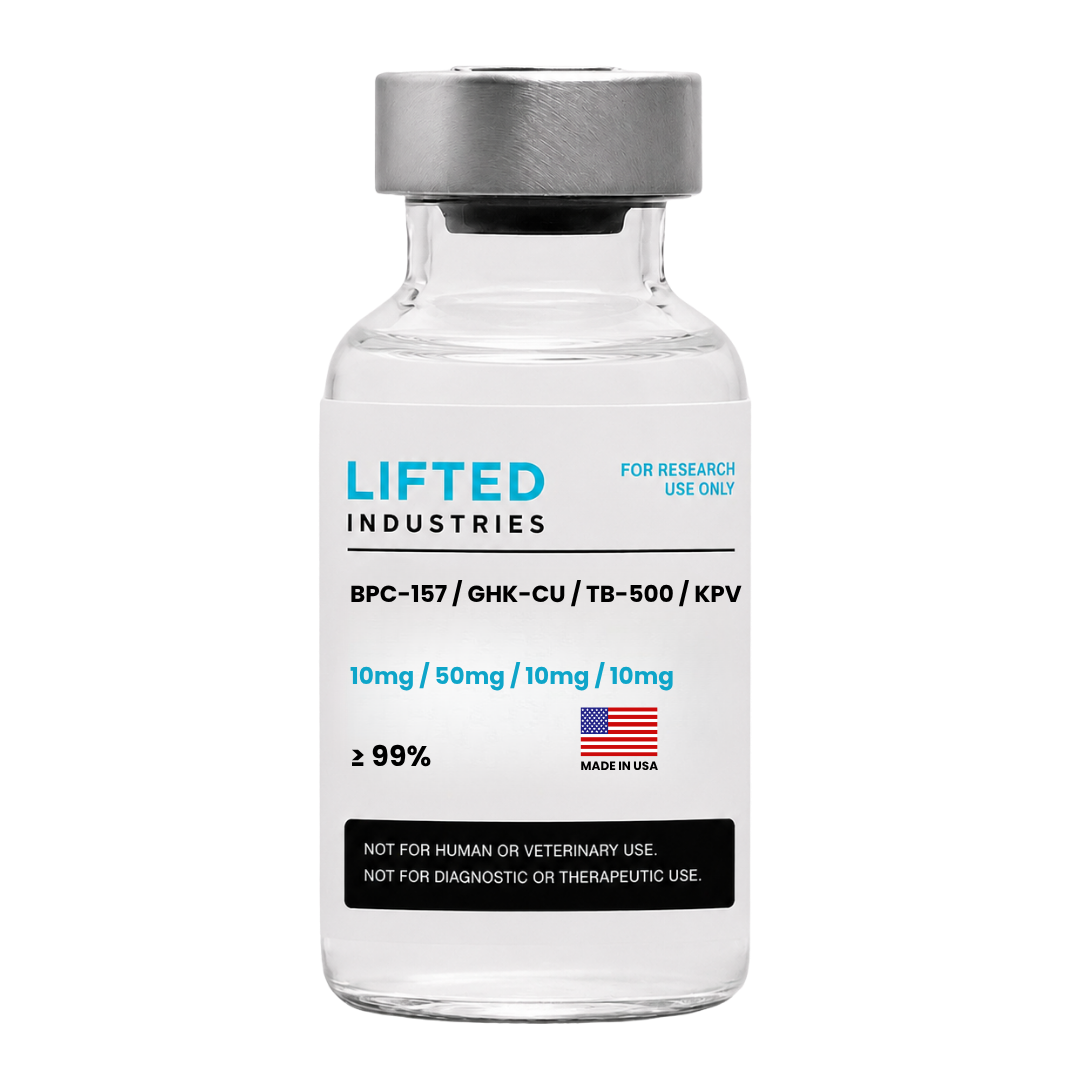
Injectable Research Vials
Sterile format across metabolic, longevity, healing, and performance categories.
For Research Use Only*
Nasal Research Sprays
Intranasal research formulations designed for convenient handling and consistent use.
For Research Use Only*
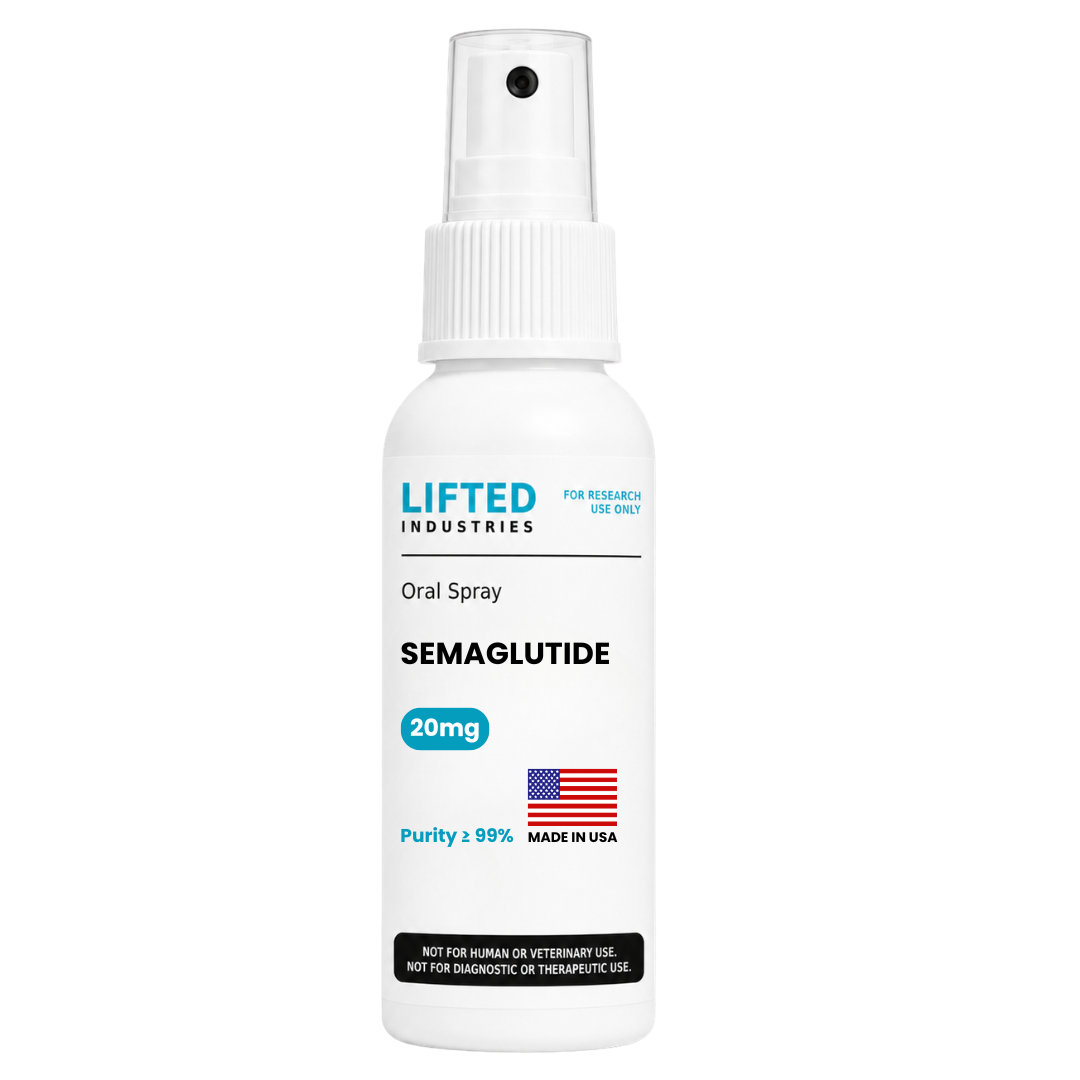
Oral Research Sprays
Oral spray formulations available across select research compound categories.
For Research Use Only*
Research Capsules
Pre-portioned capsule formulations designed for straightforward research handling and organization.
For Research Use Only*
Research Peptides by Category
Our research peptides catalogue is organised into nine categories. Every compound across all nine is supplied as research use only, to qualified wholesale accounts, with third-party lab testing behind each lot.
| Category | Representative compounds |
|---|---|
| Anti-aging and cellular health | Epitalon, GHK-Cu, NAD+, MOTS-C, SS-31, Humanin |
| Longevity | Epitalon, Glutathione, Methyl B12, Selegiline |
| Healing | BPC-157, TB-500, KPV, LL-37, Thymosin Alpha-1, ARA-290 |
| Recovery and inflammation | BPC-157 blends, TB-500, KPV, Thymosin Alpha-1 |
| Metabolic and weight loss | 5-Amino-1MQ, AOD-9604, Retatrutide, Semaglutide, Tirzepatide |
| Growth hormone | CJC-1295, Ipamorelin blends, Tesamorelin, IGF-1 LR3 |
| Nootropic and cognitive | Selank, Semax, Semax/Selank |
| Regenerative and performance | Dihexa, DSIP, IGF-1 LR3 |
| Sexual health | Kisspeptin, Melanotan II, Oxytocin, PT-141 |
What to Verify Before Ordering Research Peptides
These six checks apply to any supplier of research peptides, not only to us. Working through them before you commit is quicker than unpicking a supply problem afterwards.
- Lot-specific certificate of analysis — tied to the lot number on the vial received, not a specimen document.
- Named third-party laboratory — independent, identified by name.
- Disclosed analytical method — a purity figure without a stated method has no provenance.
- Retrievable batch records — lot numbers that resolve months after delivery.
- Documented storage conditions — stated per format, with shipping packed to match.
- Unambiguous research-use-only terms — on labelling and in the account agreement.
Our supplier evaluation guide works through the same sequence in more depth.
Third-Party Lab Testing and the Certificate of Analysis
A certificate of analysis records what an independent laboratory measured on one lot. It does not carry across batches and it is not a general endorsement.
- Identity — confirmed by mass spectrometry
- Purity — measured by high-performance liquid chromatography, with the method stated
- Lot number — the link between document and vial
- Laboratory and date — a named lab and a recent test date
Laboratories operating to recognised competence requirements work within frameworks such as ISO/IEC 17025. Independent reference data on the compounds in this catalogue is available via PubChem at the NIH. See our COA guide, batch records guide and batch traceability.
What a Research Peptides Certificate of Analysis Reports, Line by Line
Most buyers know to ask for a COA. Fewer know what a good one actually contains, which is how a generic PDF with a percentage on it ends up passing for documentation. Here is what the certificates behind these research peptides report, and what each line is for.
- Purity, with the method stated. Measured chromatographically with UV detection at 208 nm and reported as a percentage against specification. The wavelength matters: a purity number without a method and a detection wavelength is a claim, not a result.
- Identity and molecular weight by LC-MS. The certificate shows the observed [M+H] value alongside the theoretical molecular weight for the compound, so you can confirm the match yourself instead of accepting a summary line. This is the test that answers whether the material in the vial is the compound on the label.
- Bacterial endotoxin by LAL assay. Reported in EU per milligram where the format calls for it. This is a contamination measure, and it is independent of purity — a highly pure preparation can still carry endotoxin.
- Net peptide content. The measured quantity of active material, which is frequently not the same number as the label strength. A vial labelled at one strength may carry a stated net content below it, and the honest certificates say so.
- Lot number. The link between the document and the physical vial. A certificate without one cannot be reconciled to anything.
- Manufacture date and beyond-use or retest date. The window the result applies to. A purity figure is a measurement taken at a moment, not a permanent property.
- Storage condition. Stated per product, because the result assumes it. Material stored outside the stated condition is outside the certificate.
One line worth understanding: our certificates note that salts and sugars serving as fillers in injectables are not counted as impurities. That is normal practice across the industry, and it is precisely why purity and net peptide content are two separate figures measuring two different things. A supplier reporting only purity is telling you less than it looks like, and a supplier reporting neither is not really in the documentation business.
Every research peptides product page on this site carries a direct download for the current lot certificate, with no login and no account required. Documentation before commitment is the posture, and it is the reason the paperwork sits in front of the paywall rather than behind it.
Safety Data Sheets Across the Research Peptides Catalogue
Every product also carries a Safety Data Sheet, downloadable from the product page without an account. These are full sixteen-section documents — identification, hazards, composition, first aid, firefighting, accidental release, handling and storage, exposure controls, physical and chemical properties, stability and reactivity, toxicological information, ecological information, disposal, transport, regulatory information, and other information.
Two sections are worth reading before material arrives rather than after. Handling and storage is compound-specific: some compounds call for storage at or below -20°C, protected from light, dry and sealed, while others state requirements on the product insert. Stability and reactivity lists incompatibilities that differ by compound — strong acids and bases, strong oxidising or reducing agents — which matters if research peptides are being stored or handled alongside other materials.
Every SDS in the catalogue carries the same use restriction, stated plainly: this product is for research use, not for human or veterinary diagnostic or therapeutic use. That is the same posture as the labelling and the same posture as the account structure, and the consistency is deliberate.
What Ships With Every Research Peptides Order
Orders ship against a specific lot, and the documentation follows the lot rather than the SKU. A repeat order of the same product on a new lot comes with a new certificate, because the old one describes a batch you no longer have.
- Certificate of Analysis for the lot supplied, with purity, identity, endotoxin where applicable, net peptide content, dates and storage condition.
- Safety Data Sheet for the compound, in the sixteen-section format described above.
- Lot number on the vial that reconciles to both documents and back to batch-level records.
Minimum order quantities start at 25 units per SKU, where a SKU means compound, format and strength together rather than compound alone — two strengths of the same compound in the same format are two SKUs. Standard fulfillment runs 3–5 business days once an order is placed against an approved account, which is short enough to restock against real demand instead of forecasting a quarter ahead.
Documents You Submit to Buy Research Peptides Wholesale
Catalogue and pricing access is granted after account review. Documentation is not — certificates and safety data sheets are open before you apply. What the review asks for depends on your organisation type, but it generally covers four things:
- Business licensing for the entity that will hold the account.
- Professional or medical licensing where the buyer type calls for it, including physician practices, medical spas operating under medical direction, and clinics with licensed practitioners on staff.
- Resale certificate where applicable to your jurisdiction and account structure.
- General business information — entity details, shipping and billing addresses, who will place and receive orders, and the intended use of the material.
Accounts are limited to clinics, laboratories, brands, distributors, and institutions that qualify through that process. We do not sell research peptides to individual consumers, and accounts are declined where the stated use does not fit a research-use-only supply relationship. Submitting an application produces an immediate confirmation while review begins; approval unlocks catalogue and pricing; activation delivers credentials and current wholesale pricing.
Choosing a Research Peptides Category
The catalogue is organised into nine categories rather than one alphabetical list, because most buyers arrive with a research area rather than a compound name. If you already know the compound, the category pages will get you there in one step. If you do not, the categories are the faster route.
Several compounds appear in more than one category, which is not a filing error. BPC-157 and KPV sit in both healing and recovery contexts; LL-37 appears under healing and regenerative; epitalon, MOTS-c and NAD+ appear under both longevity and anti-aging. The overlap reflects how the compounds are actually researched rather than an attempt to pad the catalogue, and the product and documentation are identical regardless of which category page you arrive through.
Category pages carry the same documentation access as the product pages beneath them, so you can work down from a research area to a specific lot certificate without an account at any point in the path.
Research Peptides: Frequently Asked Questions
Do I get a COA and an SDS when I order?
Yes. Every order ships against a specific lot with a Certificate of Analysis for that lot and a Safety Data Sheet for the compound. Both are also downloadable from the product page before you order, with no account required.
Is the certificate specific to my lot?
Yes. It carries the lot number, manufacture date and beyond-use or retest date for the exact batch, and that lot number ties back to batch-level records. A new lot on a repeat order means a new certificate.
What tests appear on the certificate?
Purity measured chromatographically with UV detection at 208 nm, identity and molecular weight confirmed by LC-MS against the theoretical value, bacterial endotoxin by LAL assay in EU/mg where the format calls for it, and net peptide content as measured.
What is the minimum order?
25 units per SKU, where a SKU is compound, format and strength together.
How fast do orders ship?
3–5 business days on standard orders against an approved account.
What do I need to open an account?
Business licensing, professional or medical licensing where applicable, a resale certificate where applicable, and general business information.
Do you sell to individuals?
No. Accounts are limited to qualifying clinics, laboratories, brands, distributors and institutions.
Are these compounds approved for human use?
No. All research peptides in this catalogue are supplied for research use only. They are not FDA-approved drugs and are not supplied for administration to humans or animals.

Receiving and Storing Research Peptides
The certificate describes material as it was measured. Whether it still describes the material in your fridge depends on what happened between the two, which makes receiving inspection and storage discipline part of the documentation chain rather than a separate housekeeping task.
On arrival, reconcile three things before anything goes into storage: the lot number on the vial against the lot number on the certificate, the quantity and strength against the packing list, and the physical condition of the packaging. A mismatch found at receiving is a supplier conversation; the same mismatch found six weeks later is an unresolvable one.
Storage conditions are stated per product on both the certificate and the Safety Data Sheet, and they differ by compound and format. Some research peptides call for storage at or below -20°C, protected from light, dry and sealed. Others state requirements on the product insert. Lyophilised material and material in solution do not behave the same way, and the beyond-use or retest date on the certificate assumes the stated condition was maintained throughout.
Keep the certificate and safety data sheet with the inventory record rather than in an email thread. When a question arises about a specific vial months later — and on a repeat-order catalogue it eventually does — the lot number is the only thing that will resolve it, and it only resolves anything if the documents are still findable. Our storage guide and lot traceability guide in the resources section go further on both points.
Formats Across the Catalogue
Research peptides in this catalogue are supplied in three formats, with availability varying by compound and strength:
- Injectable vials — the most widely stocked format across categories
- Nasal sprays — common in nootropic, sexual health and anti-aging categories
- Oral sprays — available across most categories
Storage requirements differ by format and are documented per SKU. See formats explained and the storage guide. Material is USA made.
Research-Use-Only Status
Every compound in this catalogue is designated research use only. RUO compounds are not FDA-approved drugs, are not supplied for administration to humans or animals, and RUO designation is not a route around approval requirements. Accounts are qualified before activation, and we decline accounts where the stated intended use does not match the designation.
The FDA publishes an overview of drug compounding and FDA oversight, and USP compounding standards cover General Chapters 795, 797 and 800. See research use only peptides.
Buying Research Peptides by Industry
The catalogue is the same for every account; what differs is how the account is structured around it.
- Medical spas — private label options, stable SKUs, recurring supply
- Wellness clinics — predictable reorder cycles, documentation as standard
- Physicians — documentation control, defined ordering authority
- Research labs — COA access, batch records, method disclosure
See the industries overview to compare all four.
How Wholesale Qualification Works
- Application — submit organisation details and intended use via wholesale.
- Confirmation — we acknowledge receipt and flag anything missing.
- Compliance review — we verify the account’s research-use posture.
- Approval — account terms are issued.
- Activation — wholesale pricing and COA access are released.
Qualification happens once. See how to buy peptides wholesale and the documentation checklist.
Frequently Asked Questions About Research Peptides
Do I need an account to see pricing?
Yes. Wholesale pricing and COA access are released after qualification and compliance review.
Is a COA supplied for every lot?
Yes, tied to the lot number of the material received rather than the product line.
Are any of these research peptides approved for human use?
No. All are research use only, are not FDA-approved drugs, and are not supplied for administration to humans or animals.
Which analytical methods are used?
Purity by HPLC and identity confirmation by mass spectrometry, with the method stated on the certificate.
Do SKUs stay consistent between reorders?
Yes. Consistent SKU numbering across reorder cycles is part of how accounts are structured.
Is private label available?
To qualified accounts once volume and documentation requirements are confirmed — see private label.
Sourcing Research Peptides From Lifted Industries
Buying research peptides at wholesale is ultimately a documentation decision. Lifted Industries supplies research peptides to qualified accounts only, with third-party lab testing behind each lot and a certificate of analysis tied to the lot number delivered.
- Nine categories, USA-made, supplied research use only
- COA access per lot rather than per product line
- HPLC purity and mass spectrometry identity confirmation
- Lot numbers that resolve to retrievable batch records
- Consistent SKU numbering across reorder cycles
- Documented storage conditions for every format
Review documentation and quality, then apply for a wholesale account or contact our team.