Private label research PEPTIDE supply
Brands, distributors, and clinics building their own product line can work with Lifted Industries on custom packaging,
labeling, and SKU planning — once volume and documentation requirements are confirmed.Brands, distributors, and clinics building their own product line can work with Lifted Industries on custom packaging, labeling, and SKU planning — once volume and documentation requirements are confirmed.
What Private Label Peptides Cover at Lifted Industries
Private label peptides mean your brand applied to existing catalog formats and categories — not new compound development. Brands, distributors, and clinics work from the same injectable research vials, nasal research sprays, oral research sprays, and research capsules that supply our standard wholesale accounts, with custom label artwork, packaging selection, and SKU planning layered on top. All compounds are supplied For Research Use Only.
That distinction matters more than it sounds. The value of a private label peptides program is brand control, margin, and account ownership. It is not chemistry. Any supplier opening a conversation with a proprietary formulation is describing a project with a much longer timeline and a very different cost structure than a private label launch. Starting from the existing catalog is what makes a 3–5 business day fulfillment window and a 25-unit minimum possible at all.
Private label accounts receive the same Certificate of Analysis and batch record access as standard wholesale accounts, tied to the underlying compound and lot — not to the private label branding layer. Your customers get documentation that traces to the material in the vial, regardless of whose name is on the front.
Program planning runs on three tracks that move in parallel: label copy carrying the full Research Use Only language, SKU planning mapped to existing formats and categories, and minimum order quantities driven mainly by packaging complexity rather than by the compound itself. The sections below cover each in the order they tend to become urgent.
Embrace US Made Research Peptides


Who We Serve
Who We Partner With
Wholesale supply, documentation, and fulfillment built around how each buyer type actually operates.

Med Spas
Procurement-ready supply that scales with your brand.
Learn more
Wellness Clinics
Consistent lots, fast reorders, chart-ready paperwork.
Learn more
Physicians
Clinical-grade sourcing with COAs on every shipment.
Learn more
Research Labs
COAs, lot traceability, and storage specs for QA.
Learn more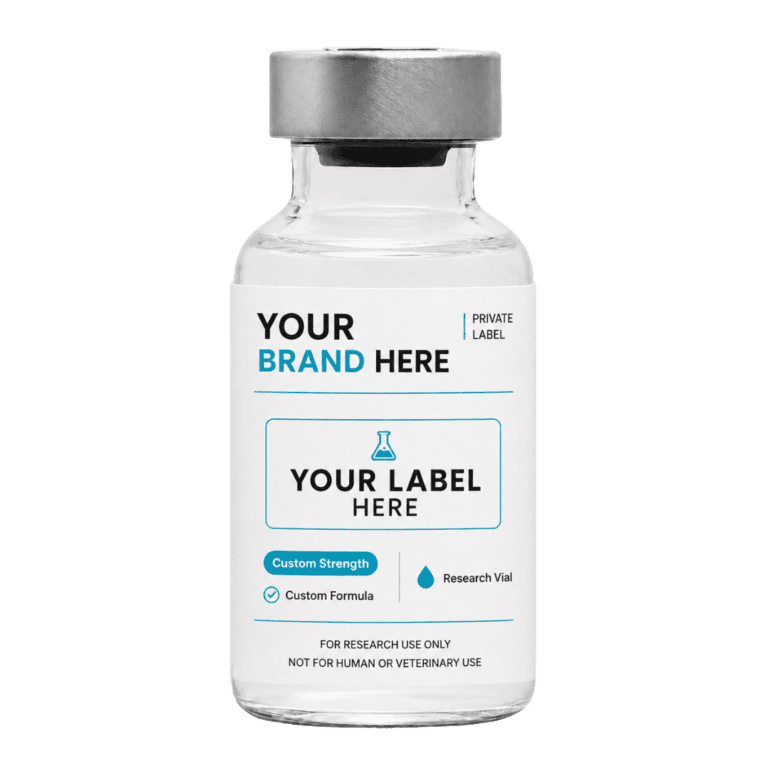
Private Label Brands
Your label, our supply chain. Launch-ready MOQs.
Learn moreResearch Peptide Formats
Several Available Options | For Research Use Only*
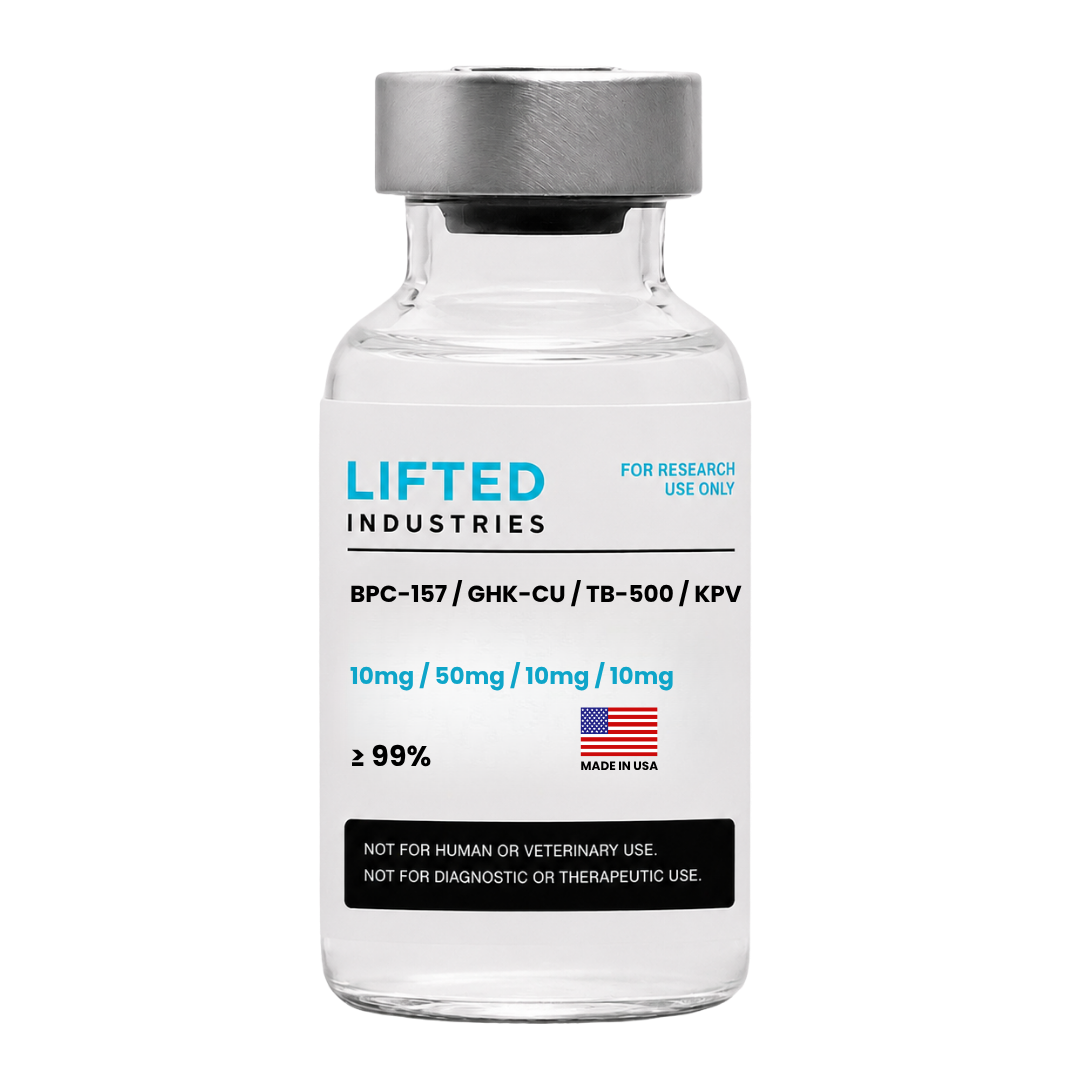
Injectable Research Vials
Sterile format across metabolic, longevity, healing, and performance categories.
For Research Use Only*

Nasal Research Sprays
Intranasal research formulations designed for convenient handling and consistent use.
For Research Use Only*
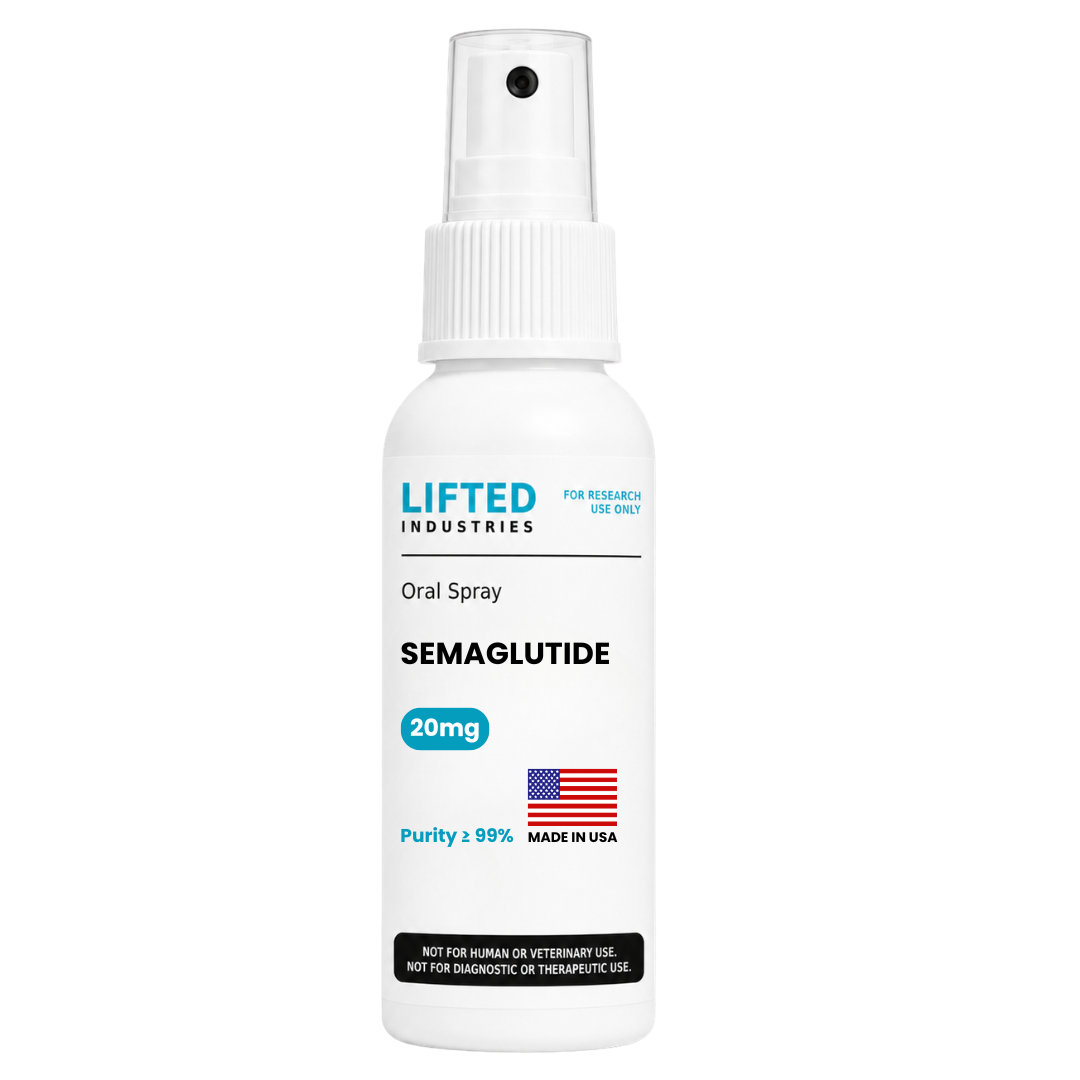
Oral Research Sprays
Oral spray formulations available across select research compound categories.
For Research Use Only*

Research Capsules
Pre-portioned capsule formulations designed for straightforward research handling and organization.
For Research Use Only*
Certified and Trusted
Wholesale Research Compounds
Documentation
Private label accounts receive the same COA and batch record access as standard wholesale accounts, tied to the underlying compound and lot — not the private label branding layer.
SKU Planning
Private label accounts work from the existing format and category catalog rather than commissioning new compounds. SKU planning covers which formats and categories to launch with, and how they map to your own product naming.
Custom Packaging and Labels
Private label engagements typically cover label design application, packaging format selection within our existing format lineup (injectable vials, nasal sprays, oral sprays, capsules), and compliance-reviewed label copy that maintains RUO posture.
Why Lifted
Why Organizations Source Through Lifted Industries
USA Manufactured, Documentation-Backed Supply
Documentation Before Commitment
Built for Repeat Ordering and Scalability
Private Label Support for Your Brand
Choosing Formats for a Private Label Peptides Line
Four formats are available to private label programs, and each carries different packaging, storage, and labeling consequences.
- Injectable research vials. A sterile format available across metabolic, longevity, healing, and performance categories. Vials with crimped seals have the most involved component supply chain of the four, and they carry the strictest storage and handling language.
- Nasal research sprays. Intranasal research formulations designed for convenient handling and consistent use. The pump assembly is a separate component with its own minimum, which is why spray formats and vial formats rarely share a minimum order quantity.
- Oral research sprays. Available across select research compound categories. Mechanically similar to nasal sprays from a packaging standpoint, but labeled and handled differently.
- Research capsules. Pre-portioned capsule formulations designed for straightforward research handling and organization. Typically the simplest secondary packaging of the four.
Format choice is not only a product decision. It sets your storage requirements, your artwork count, and a meaningful share of your minimum order quantity. A line that spans all four formats is running four packaging supply chains in parallel; a line that launches on one or two is running one or two. Both are legitimate strategies, but only one of them is inexpensive to start. All formats are supplied For Research Use Only, and the labeling obligations below apply to each of them.
Minimum Order Quantities and Lead Times
Minimum order quantities on private label peptides start at 25 units per SKU. Standard fulfillment runs 3–5 business days once an order is placed against an approved account. Print and artwork production is a separate timeline that runs before that window opens — plan it as its own schedule rather than assuming it folds into supply lead time.
Five factors drive where a given SKU lands relative to that minimum, roughly in order of impact:
- Container type. A vial with a crimped seal and a spray bottle with a pump assembly have different component supply chains and different minimums.
- Closure and seal. Tamper-evident and crimped closures carry their own component minimums.
- Secondary packaging. Cartons, inserts, and tamper-evident features each add a minimum of their own.
- SKU count. Ten SKUs at low volume each is a harder program to run than three SKUs at higher volume, and it prices that way.
- Compound and strength. Real, but usually the smallest factor of the five.
The practical implication is that narrowing your launch SKU list is the most effective lever you have on program economics. Brands that launch with a focused range and expand once reorder patterns are visible almost always do better than brands that launch wide and then discover which SKUs move after the packaging is already bought.
Label Copy and Compliance Review
Label copy is the part that sinks launches, and it sinks them late — usually after artwork has been approved internally and sent to print. Get compliance review on artwork before print, not after.
At minimum, a private label peptide label carries product identity, strength and net quantity, the lot number, storage conditions, your entity as responsible party, and prominent Research Use Only — Not For Human Consumption language. Format-specific handling language drawn from the Safety Data Sheet may also apply, and it differs between an injectable vial, a nasal spray, an oral spray, and a capsule.
Private label peptides engagements here typically cover label design application, packaging format selection within our existing format lineup, and compliance-reviewed label copy that maintains RUO posture. That review is a gate, not a formality: a print run that has to be scrapped and reordered costs more than the entire artwork process did.
Brief your marketing team or agency on claims restrictions before any copy is written. Rewriting finished creative is slower and more expensive than scoping it correctly at the start, and marketing copy written without those constraints tends to drift toward exactly the language that cannot appear on a Research Use Only product.
Documentation Your Private Label Peptides Carry
A Certificate of Analysis documents the testing performed on a specific lot — the exact batch behind the product, not a generic reference sample for that SKU. Every Lifted Industries product page includes a direct COA download for its current lot, with no login or account required to view it.
Every product also carries a Safety Data Sheet covering handling, storage, and hazard information for that compound as a research material, downloadable from the product page without an account. Every SKU is tied to a lot number, and that lot number ties back to batch-level records.
For a private label program this matters twice over. You rely on it during qualification, and your own customers rely on it downstream. Confirm early how lot numbers and COAs will be delivered to you and how you will pass them on — that hand-off is far easier to design before launch than to retrofit once orders are moving.
Certificates of Analysis, lot numbers, and batch records are available for review as part of the account qualification process — not after the first order ships. Documentation before commitment is the posture, and it applies to private label accounts exactly as it applies to standard wholesale accounts.
SKU Planning for a Private Label Peptides Launch
A SKU is defined by three things stacked together, and each layer multiplies the ones above it:
- Compound. Which compounds the line will carry.
- Format. Vial, nasal spray, oral spray, or capsule. Each is a separate SKU with separate packaging and separate storage requirements.
- Strength or fill. Multiple strengths of the same compound in the same format are separate SKUs and need separate label artwork.
Four compounds across two formats at two strengths is sixteen SKUs, sixteen artwork files, and sixteen minimum order quantities — not four. Counting that honestly at the planning stage is the single most useful hour in the process.
Two habits make everything after it easier. Build an internal SKU naming scheme that encodes format and strength, so a lot number and a product name can be reconciled without opening a spreadsheet. And map the system against your actual storage capacity before committing, since formats differ in their storage requirements and a program that fits on paper can overflow a cold storage footprint in practice. Wholesale accounts get consistent SKU numbering and inventory visibility, so reordering does not mean re-verifying the same information every cycle.
Sourcing and Manufacturing Behind the Label
Lifted Industries compounds are manufactured at a USA-based facility, confirmed by direct site visit. Our manufacturing partner reports operating in accordance with applicable cGMP requirements, and we have reviewed their supporting documentation. That documentation is available to qualified accounts on request.
For a private label peptides brand this is the part of the supply chain your customers will ask about and your own compliance review will need to stand behind. A sourcing claim on your label becomes your claim the moment your name is on the front, so it is worth understanding what sits behind it before print. The FTC Made in USA standard sets out what a country-of-origin claim requires, and it is worth reading before any origin language reaches artwork.
Research Use Only is a scope, not a shield. The FDA guidance on products labeled Research Use Only is the reference point for how that designation is meant to function, and a compliant private label peptides program treats it as a constraint that shapes the whole product rather than a disclaimer added at the end.
Reorder Economics and Scaling a Private Label Line
The first order in any private label peptides program is the expensive one. Artwork is being produced, packaging components are being sourced for the first time, and every SKU is carrying its own setup cost. Reorders are where the economics of the program actually show up.
That is why the launch SKU list matters more than almost any other decision. Three SKUs that reorder every six weeks build a more workable program than twelve SKUs where nine of them sit. Reorder velocity also tells you which strengths and formats your accounts actually want, which is information you cannot buy in advance and cannot get from a wide launch any faster than from a narrow one.
Wholesale accounts get consistent SKU numbering and inventory visibility, so a reorder is a reorder rather than a fresh qualification exercise. Combined with a 3–5 business day fulfillment window, that makes it realistic to run a lean inventory position and restock against demand instead of forecasting a quarter ahead.
Expansion is straightforward once the base is running. Additional strengths within a format you already carry are the cheapest expansion; additional formats are the most expensive; additional compounds sit somewhere between the two, depending on which formats you take them in.
What to Confirm Before You Commit
A short list worth resolving before artwork is released to print or a first order is placed. Most private label programs that stall, stall on one of these.
- Count your real SKU matrix — compound, format, and strength — and check the total against your storage capacity, not just your budget.
- Build an internal SKU naming scheme that encodes format and strength before you have SKUs to name.
- Schedule a compliance review gate on artwork before releasing any print file.
- Confirm how lot numbers and COAs will be delivered to you, and how you will pass them downstream to your own accounts.
- Brief your marketing team or agency on claims restrictions before any copy is written.
- Plan print lead time and production scheduling as separate timelines from supply lead time.
- Review the COA and SDS for every compound on your launch list, not only the headline one.
- Decide who owns the artwork files and where they are stored, so a reprint two years from now does not start from scratch.
None of these are exotic requirements. They are the ordinary mechanics of running a branded product line. The reason they are worth listing is that private label programs tend to be planned as a branding exercise and then run as a logistics one, and the brands that treat the logistics as the actual project launch faster and reorder sooner.
How to Open a Private Label Peptides Account
Private label peptides access runs through the same account structure as standard wholesale. Pricing and catalog access are reserved for approved accounts; documentation is not.
- Submit an application as a clinic, laboratory, brand, or distributor.
- Receive immediate confirmation while our team begins reviewing your information.
- Complete compliance review — buyer qualification and documentation review.
- Account approval unlocks catalog and pricing access.
- Account activation delivers login credentials, catalog access, and current wholesale pricing.
Once the account is approved, submit a private label peptides inquiry with your target formats and categories. Bring a draft SKU list if you have one, even a rough one. The fastest programs to launch are the ones that arrive with a defined compound, format, and strength matrix rather than an open-ended brief.
Wholesale accounts are limited to clinics, laboratories, brands, distributors, and institutions that qualify through the account review process. We do not sell to individual consumers.
Private Label Peptides: Frequently Asked Questions
What is the minimum order for private label peptides?
Minimums start at 25 units per SKU. Because a SKU is defined by compound, format, and strength together, the minimum applies to each combination separately rather than to the order as a whole.
How long does fulfillment take?
3–5 business days on standard orders against an approved account. Artwork and print production run on a separate timeline that completes before that window begins.
Does private label mean a custom formulation?
No. Private label peptides here means your brand on existing catalog formats and categories. New compound development is a different project with a substantially longer timeline and cost structure.
What has to appear on a private label peptide label?
Product identity, strength and net quantity, lot number, storage conditions, your entity as responsible party, and prominent Research Use Only — Not For Human Consumption language. Format-specific handling language from the Safety Data Sheet may also apply.
Do private label accounts get the same documentation?
Yes. COA and batch record access is tied to the underlying compound and lot, not to the branding layer, so it is identical to standard wholesale account access.
Which formats can carry my brand?
Injectable research vials, nasal research sprays, oral research sprays, and research capsules — the same four formats that supply standard wholesale accounts. All are supplied For Research Use Only.
Start Private Label Inquiry
Get Your Brand Started Now
How The Private Label Application Process Works
Submit a private label application with your brand and packaging requirements.
Get an immediate confirmation while our team begins reviewing your information.
We confirm your business information and any licensing relevant to your account type.
Your account is approved, or we follow up directly if anything additional is needed.
Receive login credentials, catalog access, and current wholesale pricing.
AFTER YOUR ACCOUNT IS APPROVED FOR LAUNCH:
- Submit a private label inquiry with your target formats and categories
- Confirm MOQ, packaging, and label requirements
- Complete label copy compliance review
- Confirm production timeline and first-run quantities